
Surface Treatment for Metal Hardware Parts: Choosing by Environment
Most coating arguments are settled by a drawing note that says "zinc plated" with no thickness, no specification and no acceptance test. Six months later the parts come back from a coastal installation with white corrosion on the threads and nobody can prove whether the coating was thin, wrong, or never applied. Surface treatment is a specification problem before it is a chemistry problem.
Start with the environment, then pick the finish
Four questions decide most of the answer. What is the part exposed to: indoor air, condensation, road salt, seawater, or process chemicals? What temperature does it see? Will it be handled and scratched during assembly? Does it need to conduct electricity or be earthed? A bracket for an indoor robot cell and a bracket for a dockside crane can share a drawing and still need completely different finishes. Writing the exposure into the purchase order costs nothing and prevents the annual argument.
Pretreatment decides the outcome more than the coating does. A zinc layer applied over residual cutting oil, or over a phosphate that was not properly rinsed, will blister within months, and no thickness specification will rescue it. Ask what cleaning sequence precedes the coating, how rinse water is monitored, and how often the bath chemistry is analysed. A finishing line that cannot describe its pretreatment in order is a line that is guessing, and the guess will show up on your parts eventually.
Anodizing aluminum
Type II sulfuric anodizing builds 5 to 25 micrometres of oxide, typically 10 to 15 for general hardware, and gives moderate wear resistance plus a good base for dye. Type III hard anodizing runs 25 to 50 micrometres and produces a much harder surface, which suits locating blocks, rail mounts and anything that slides. Both reduce fatigue strength, and both grow into the part, roughly half inward and half outward, so thread and bore allowances must be planned. Sealing matters as much as thickness: an unsealed anodized layer will accept fingerprints and stain in service, and a poorly sealed one fails a dye stain test that a competent finisher runs as routine quality control.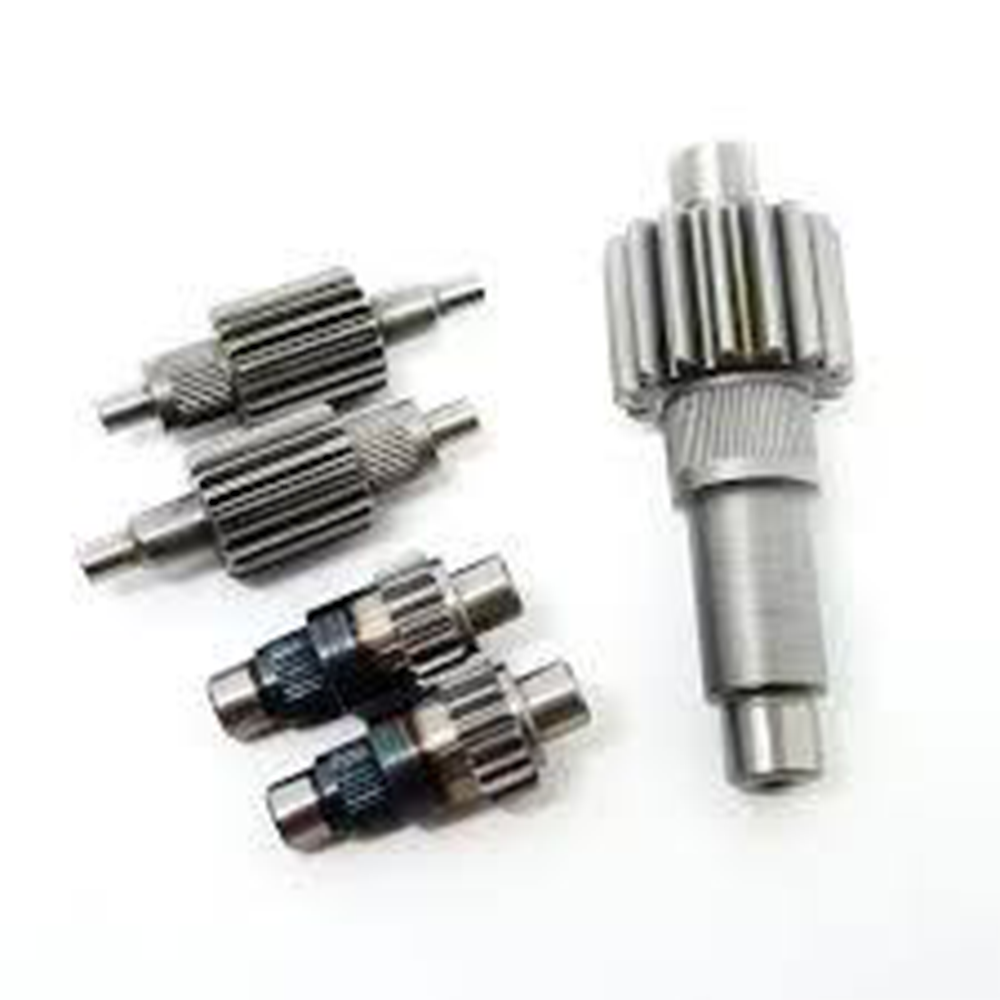
Plating steel and the embrittlement trap
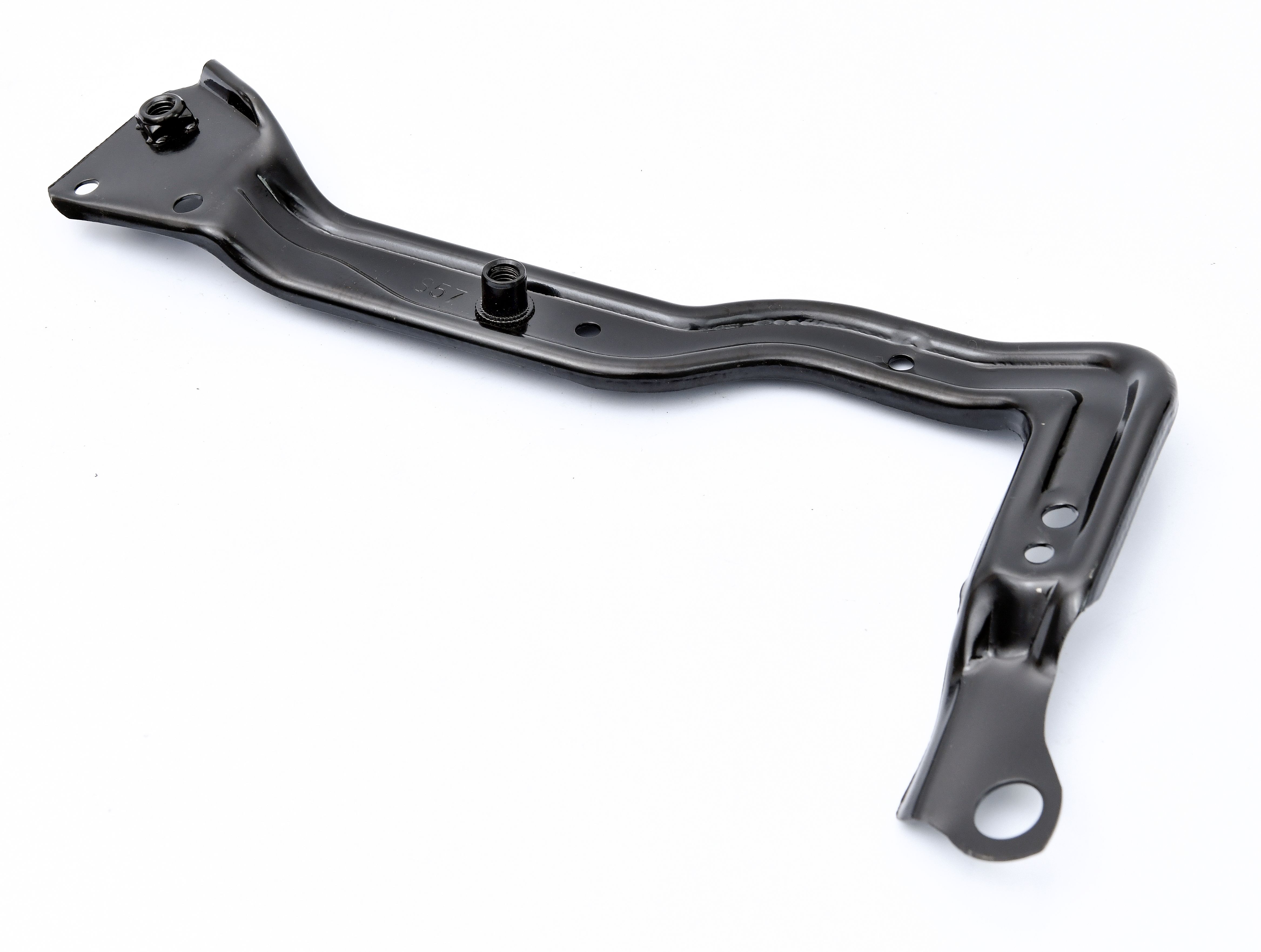
Trivalent zinc at 8 to 12 micrometres is the workhorse for indoor steel hardware. Zinc-nickel, with 12 to 15 percent nickel, gives three to five times the corrosion resistance and belongs on underbody and marine parts. Electroplating carries a risk that is easy to ignore: high-strength steel absorbs hydrogen during the process and can crack days later under load. Parts above roughly 1,000 MPa tensile strength, which includes most grade 10.9 and 12.9 fasteners, need a post-plating bake within a defined window, usually four hours at 200 degrees Celsius. A finishing supplier that cannot state its baking procedure in writing should not be given high-strength fasteners.
E-coat and powder: film thickness vs edge coverage
Powder coating at 60 to 90 micrometres is durable, available in any colour, and hides surface imperfections. It also bridges holes, fills threads and leaves a soft layer on mating faces, so masking is not optional. Cathodic epoxy e-coat, typically 15 to 25 micrometres, covers edges and recesses far better because it deposits from a bath and is driven by voltage. For complex welded assemblies with sharp edges and internal cavities, e-coat outperforms powder on corrosion protection even though it looks less impressive. Many manufacturers use both: e-coat as a primer, powder as a topcoat, which is a sensible combination for outdoor equipment.
Thin films and special cases
Physical vapour deposition of titanium nitride or chromium nitride gives a hard, thin, decorative layer at 2 to 5 micrometres. It works well on tooling and wear surfaces but does not protect steel from corrosion on its own, because the coating is thin enough to be breached by a scratch. Chromate conversion coatings on aluminum provide conductivity and a good paint base but offer limited stand-alone protection. Passivation of stainless steel, following ASTM A967, removes free iron from the surface and restores the oxide layer; it is not a coating and it will not fix the wrong alloy choice.
Proving what you actually received
Three tests cover most disputes. Coating thickness by magnetic gauge or eddy current, on a defined number of points per part. Adhesion by cross-cut or tape test, following ISO 2409 or ASTM D3359, which catches poor pretreatment. Corrosion by neutral salt spray per ASTM B117 or ISO 9227, with the acceptance criterion stated as hours to white rust and hours to red rust. Note that salt spray is a comparative test, not a life prediction. A part that survives 500 hours in fog may still fail in a chemical plant, and a part that fails at 200 hours may last a decade indoors.
A short checklist for the finishing supplier
Ask which specification governs each finish, what thickness range is guaranteed, how threads and bores are masked, whether baking is performed after plating, and how often salt spray coupons are run. A metal finishing manufacturer that answers all five without hesitation is usually running a controlled line. One that answers with a brochure is not.
References
ISO 7599:2018, Anodizing of aluminium and its alloys, Method for specifying decorative and protective anodic oxidation coatings on aluminium. International Organization for Standardization, Geneva.
ISO 4042:2018, Fasteners, Electroplated coating systems. ISO, Geneva.
ASTM B117-19, Standard Practice for Operating Salt Spray (Fog) Apparatus. ASTM International, West Conshohocken, PA.
ISO 9227:2022, Corrosion tests in artificial atmospheres, Salt spray tests. ISO, Geneva.
ASTM D3359-17, Standard Test Methods for Rating Adhesion by Tape Test. ASTM International, West Conshohocken, PA.
ASTM A967/A967M-17, Standard Specification for Chemical Passivation Treatments for Stainless Steel Parts. ASTM International, West Conshohocken, PA.
ASM Handbook, Volume 5: Surface Engineering. ASM International, Materials Park, Ohio, 1994.
