
Automotive Hardware Parts: What a Stamping Supplier Must Prove
Every automotive hardware parts program starts with a price per piece and ends with a conversation about why the eighth shipment was short by four hundred units. The price is easy to compare. Everything that decides whether the program runs smoothly sits behind it: die design, coil yield, weld fixturing, coating thickness control and a paper trail that satisfies a customer audit. A purchasing team that only reads the quote is buying the first month of a two-year relationship.
Tooling is where the real cost hides
A progressive die for a mid-size bracket commonly runs from a few thousand to several tens of thousands of dollars depending on stations, tolerances and whether cam actions are needed. Suppliers recover that investment in one of two ways: an upfront tooling charge, or an amortized piece price with a stated volume assumption. Both are legitimate. The problem is an amortized price with no volume floor, which lets a supplier recoup tooling twice if volumes fall short. Ask for the tooling ownership clause in writing, and confirm whether the die is transferred to you at end of program or retained by the factory.
Die type decides your cost curve
Progressive dies suit annual volumes above roughly 50,000 pieces and pay for themselves through cycle time. Transfer dies handle larger parts that will not fit a coil-fed line. Manual or single-operation dies make sense below about 10,000 pieces a year, where tooling cost dominates and cycle time does not. The mistake buyers make is requesting progressive tooling for a 6,000-piece program because a competitor quoted it. The piece price looks lower and the total cost is higher once the tool is amortized across three years of low volume.
Material yield is a design decision
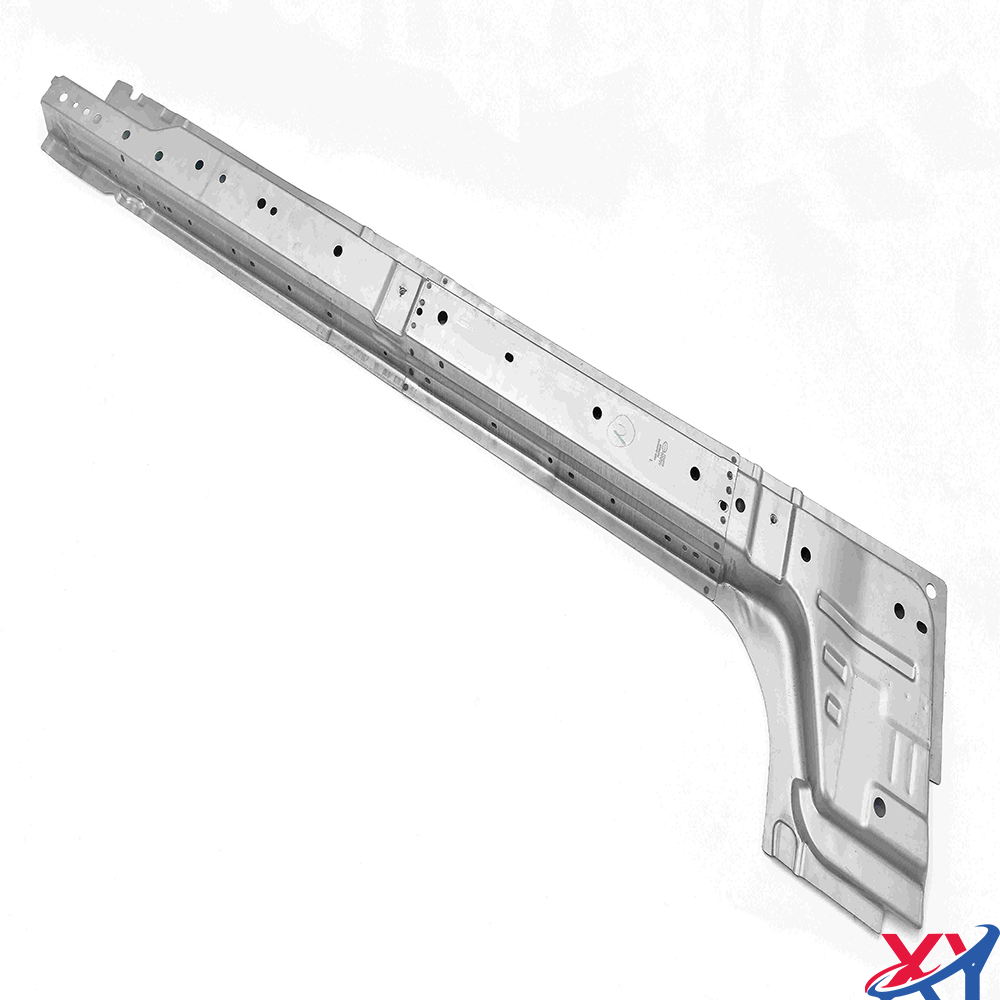
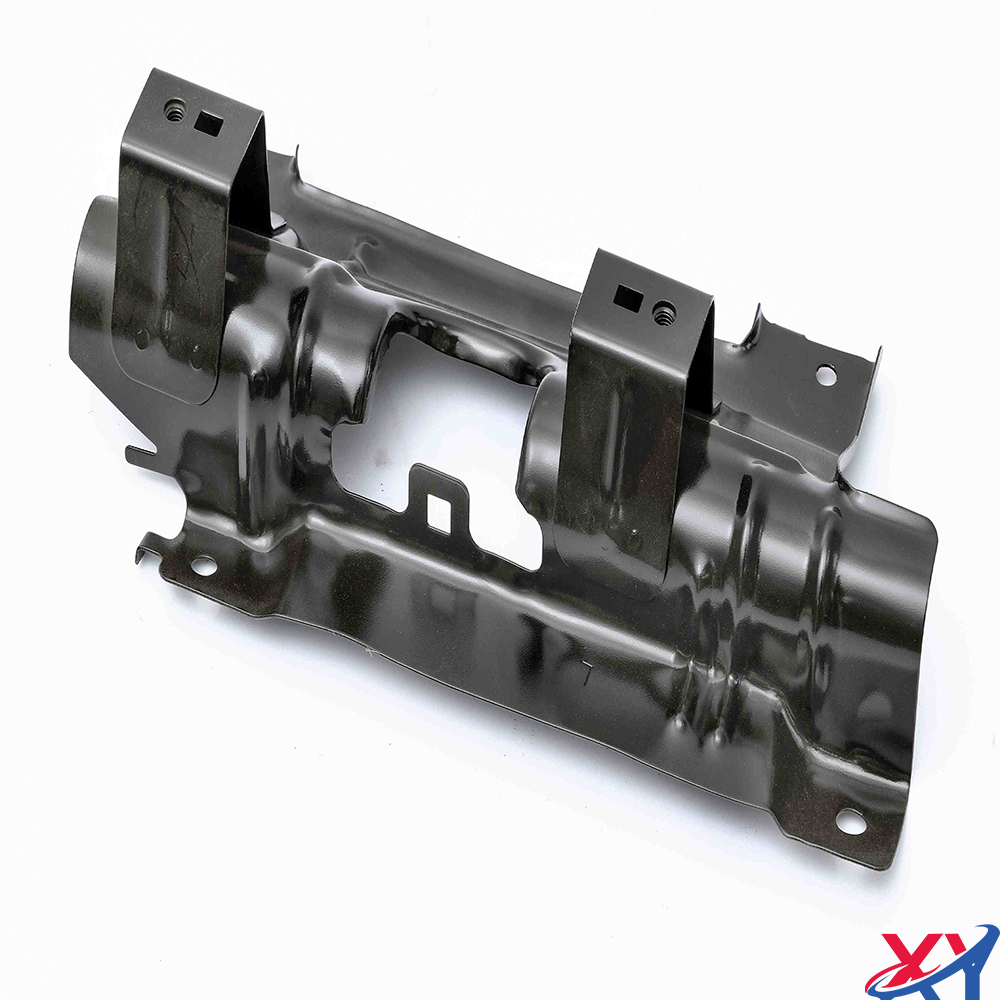
Coil utilization on a stamped bracket often lands between 55 and 75 percent. The difference between those numbers, on a million parts, is real money. Blank orientation, carrier width, and whether two parts can be nested or mirrored across the strip all affect yield before a single part is produced. A supplier who quotes without commenting on the blank layout either did not look at the drawing or plans to absorb the difference in a change order. Good manufacturers bring a strip layout sketch to the quotation meeting. It takes them twenty minutes and saves the customer a redesign.
Welding, riveting and sub-assembly
Many automotive hardware parts are not single stampings but welded assemblies: a bracket, a reinforcement and two weld nuts. Projection welding gives repeatable nuggets on nut and stud attachment, provided the projection height and current are controlled per lot. Robot MIG welding handles larger structures but introduces distortion that must be planned for in the fixture, not corrected afterwards with a hammer. Self-piercing rivets avoid heat and coating damage, which matters on pre-coated steel. Whatever the joining method, the supplier should be able to show pull-test or torque data at a defined frequency, not just a visual check at the end of the line.
Coating choices by vehicle zone
An interior bracket can live with a thin trivalent zinc flash. An underbody part exposed to road salt needs zinc-nickel at 8 to 12 micrometres, or a zinc flake coating with a topcoat, and the fastener threads need a lubricated finish so clamp load does not change after several assembly cycles. Engine compartment parts face heat as well as moisture, which pushes toward aluminized steel or a higher-temperature coating. Salt spray hours to red rust, tested per ASTM B117, are the usual acceptance number, though buyers should remember that continuous salt fog is a ranking tool, not a prediction of field life.
PPAP and run-at-rate
An IATF 16949 supplier will submit a production part approval file covering dimensional results, material and performance testing, process flow, control plan and failure mode analysis. Level 3 submission, with samples and full documentation, is the common requirement for a new part. The step that gets skipped under schedule pressure is run-at-rate: an hour of production at the quoted cycle time, with the quoted staffing, using production tooling. A supplier that cannot demonstrate the quoted rate before launch will find the shortfall after launch, when the customer has no alternative source. Insist on the demonstration, and insist that the parts produced during it are the ones submitted for approval.
Packaging is part of the part
A stamped bracket that arrives bent is a quality defect, not a shipping problem. Returnable steel bins with dedicated dunnage cost more than cardboard and repay the difference within a year on any program above 20,000 pieces. Ask how parts sit in the bin, whether they can nest and tangle, and whether the container suits the customer's line-side handling. A supplier that ships in bags and lets the customer sort is moving labour cost around rather than removing it, and the move always happens at the worst possible moment in the launch.
References
IATF 16949:2016, Quality management system requirements for automotive production and relevant service parts organizations. International Automotive Task Force, 2016.
AIAG Production Part Approval Process (PPAP), 4th edition. Automotive Industry Action Group, Southfield, Michigan, 2006.
ASTM B117-19, Standard Practice for Operating Salt Spray (Fog) Apparatus. ASTM International, West Conshohocken, PA.
Hosford, W. F. and Caddell, R. M., Metal Forming: Mechanics and Metallurgy, 4th edition. Cambridge University Press, 2011, Chapters 7 and 8.
Kalpakjian, S. and Schmid, S. R., Manufacturing Engineering and Technology, 8th edition. Pearson, 2020, Chapter 16.
ISO 4042:2018, Fasteners, Electroplated coating systems. International Organization for Standardization, Geneva.
